Post 1: IS MY HAND WASH TOXIC?
- Apr 24, 2020
- 4 min read

Soap. A product we all use every single day. A product we feel better about ourselves by using as often as we can- before and after eating, before cooking, after being out and about and so on so on. What could possibly be so damaging about a product that claims to be antibacterial killing 99.9% of germs?
Well… let’s have a look at the ingredients causing concern and the direct/ potential affects these may have on our bodies:
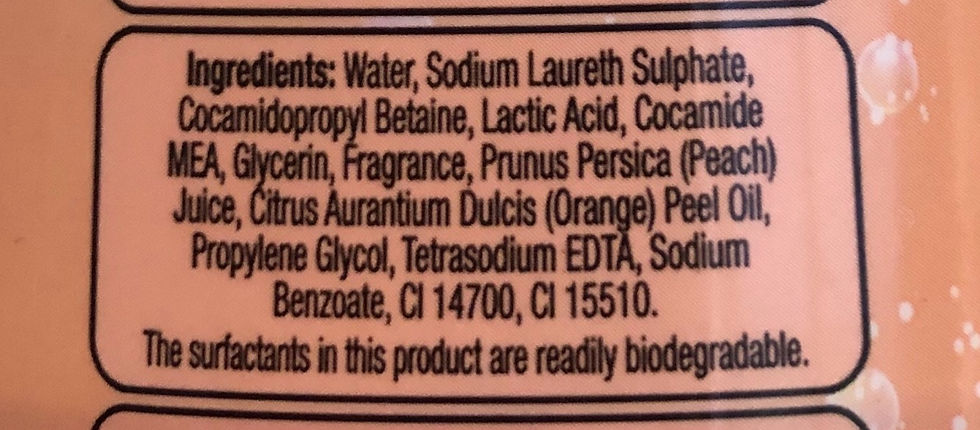
Sodium Laureth Sulphate (SLS):This ingredient is the foaming agent found in soaps, shampoos, toothpaste and more. Although there is mixed information on this product, my studies have found that when used in concentrations of 2 percent or greater, it is skin irritant. According to the National Institute for Occupational Safety and Health, in cases where SLS has been contaminated with 1,4 dioxane, (a by-product of the manufacturing process) it may be carcinogenic to humans and may also cause harm to the kidneys, liver and central nervous system. It seems as though consumers are not concerned about this research as it has been deemed 'safe' in small concentrates and when washed off the skin immediately. The long-term effects of using products containing this ingredient however, are yet to be determined.
Cocamidoproply Betaine (CAPB)
CAPB is a popular cause (although may not affect everyone) for rosacea, eczema, skin irritation, and eye irritation. It can also be found in conditioners, shampoos, makeup removers, body wash, shaving cream, contact lens solutions and toothpastes.
Cocamide MEA: Another ingredient with mixed studies in which have deemed it safe in ‘wash off’ products and in small concentrations. Despite being regarded as ‘safe’ in these circumstances it has been linked to be a carcinogenic. Read more below:
Fragrance or Parfum: This ingredient is found in so many of our prodcuts.. Think about your candles, air-fresheners, perfume, body butter, hand lotion, skincare, cosmetics almost everything has an added scent. The truth about fragrance is that the manufactures are not required to list the ingredients in which have made up the fragrance. This means the word ‘fragrance’ could really be made up of several toxic chemicals (parabens, pthatlates and synthetics) that are linked to cancer, hormone disruptions, asthma and allergen triggers, reproductive malformation, diabetes and obesity. The Environmental Working Group found that more than 75% of products listed with the ingredient ‘fragrance’ or 'parfum', contained these harmful phthalates. Another study conducted by Dr Phillip J. Landrigan of the Mount Sinai Children’s Environmental Health Centre linked fetal exposure with autism, ADHD and neurological disorders.
Tetrasodium EDTA: This ingredient is valued in skin care as it allows for a deeper penetration of other ingredients. It is also known to prevent the growth of mould hence why manufactures like it. Despite its benefits, other studies have suggested that it may be carcinogenic or an irritant to the skin with long term use. Further study is required to prove this.
Sodium Benzoate: This ingredient is commonly used as a food additive in soft drink, bottled lemon juice, pickles, salad dressing, jelly, soy sauce and more. The large concern associated with this ingredient is its ability to convert to benzene, a known carcinogenic. Other potential effects include inflammation, ADHD, appetite control, allergies and oxidative stress. Although more research is needed. Research shows it may also have medicinal benefits such as reducing high levels of ammonia, slowing down MS and more.
SO, WHAT NOW?
YOUR NEW SOAP ALTERNATIVE
I may have left you thinking ‘so what now?’ That is definitely what I was left thinking after doing this research also. I mean if we have used these products every day for our entire lives can they really be that bad? How could the government allow these chemicals to be used if they really were as harmful as some studies have revealed them to be? Believe me I pondered these questions also. It left me thinking about how once upon a time asbestos and Tabaco were deemed safe yet we think so differently of these now. It also left me thinking maybe my 'oh so sensitive skin' has been trying to tell me something all along.
The soap alternative I use now is making my own liquid soap with Castile Soap. You can find this online at ‘Oils for Life’ in it’s most purist form or in Priceline (DR. Bronners Pure Castile Soap). Simply mix ¼ cup of castile soap to 3-4 cups of warm water and pop it in a foaming soap dispenser (it works much better trust me). This equates to be approximately $3.28 for a whole litre! You would spend this much on a small 250ml bottle. I also use this soap as a body wash. You’ll be surprised how good it is.
Castile soap in its purist form does not contain Phthalates, Formaldehyde, Mineral Oils, Sulfates, Parabens or GMO products. It is perfectly natural, safe and has no potential risks associated with its use.
* IMPORANT *
Some of my research is based on studies in the US and may differ slightly in other countries.
Although minimal exposure to these ingredients may seem harmless, it is the long term exposure and exposure we receive from multiple products that may be detrimental for our health.
Please also be aware that although some products have been listed as carcinogenic, note that some of them are listed as ‘may be carcinogenic’ and hence do not have a definite study to prove that they are. Perhaps with further study on long term this will change.
As always, please do your own research before making up your mind on which products you deem as safe or unsafe. I have simply complied this article based on the research I have found. I have done my best to check various websites providing the pro's and con's of each chemical and the scientific studies that have been conducted around them.
If you have found research that is counteractive to what I have found, please let me know!
Resources for Reference and Future Study
I have found these to be the most beneficial:


Well done, Kezzia. Using your isolation!