POST 3: IS NATURAL DEODORANT WORTH THE HYPE?
- May 8, 2020
- 4 min read
You've likely heard about many people making the switch to 'natural deodorant' and perhaps you have even tried it yourself. Whether you are a fan of it or not, let me share some insight into what ingredients can be found in the commonly used deodorant and the effects in which it may be having on your body.

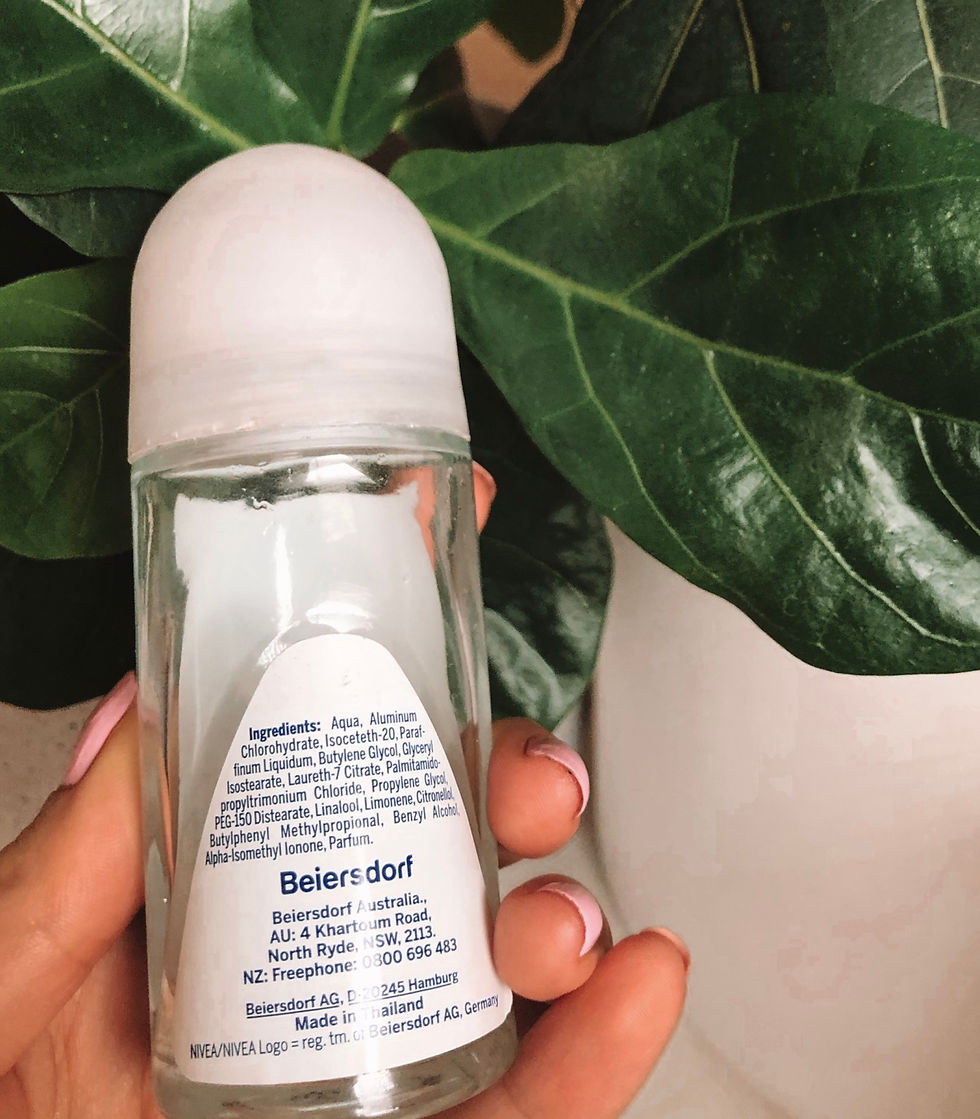
Aluminium
Although aluminium has been linked to various health problems, the evidence is lacking. More studies are required to prove this link.
Paraffinum Liquidum (Mineral Oil)
Although a natural ingredient, mineral oil is classified by the EWG as a human immune toxicant or allergen. This is partially due to the fact it prevents the skins normal respiration. Although there are mixed arguments suggesting this ingredient is actually beneficial to the skin.
Butylene Glycol
Despite there being evidence to support the benefits in which this ingredient can bring, it is also known to be a skin irritant to some and may also case respiratory issues when breathed in. It is not however of highest concern.
Laureth 7 Citrate
This ingredient is not immediately concerning however, it is possible that 1,4 dioxin (a known carcinogen) may be a byproduct of the manufacturing process. On EWG's (Environmental Working Wroup) 1-10 scale rating where 1 is the lowest risk and 10 is the highest, laureth 7 citrate is rated as a 3.
Palmitamidopropyltrimonium chloride
Wow, just take a second to attempt pronouncing this one! Palmitamidopropyltrimonium chloride may be irritating to the skin and when inhaled, may cause respiratory issues. It is not however, of high concern.
Propylene Glycol
When used in large amounts or for extended periods, propylene glycol toxicity may occur. This may cause damage to the central nervous system and may also cause cardiac arrhythmia, hemolysis, seizures and agitation.
Linalool
This ingredient is a chemical fragrance and is known to be a skin irritant.
Butylphenyl Methylpropional
Although more research is required, studies have shown that this ingredient is likely to be classified as a CMR2. CMR2's are known to be carcinogenic, mutagenic and endocrine disruptors resulting in fertility issues.
Parfum/ Fragrance: The word ‘fragrance’ or 'perfume' in this case, could really entail several toxic chemicals that are linked to cancer, hormone disruptions, asthma and allergen triggers, reproductive malformation, diabetes and obesity. The Environmental Working Group found that more than 75% of products listed with the ingredient ‘fragrance’ contained these harmful phthalates. Another study conducted by Dr Phillip J. Landrigan of the Mount Sinai Children’s Environmental Health Centre linked fetal exposure with autism, ADHD and neurological disorders.
After reviewing this particular deodorant, we can see the ingredients of highest concern, are the last two listed. Whilst the other ingredients have potential side effects, there is not direct evidence to suggest they are harmful when used topically. In order to compare, let's have a look at some of the additional ingredients that can be found in the following deodorant:

Butane and Isobutane:
Both of these gases can have extreme side effects when inhaled in high concentrations. They can cause dizziness, lightheadedness, irregular heartbeat, passing out and more. In extreme cases, death can occur.
Propane:
This gas is extremely harmful when inhaled in large concentrations and can cause damage to the nervous system. In extreme cases, death can occur.
Cyclopentasiloxane (D5):
Interestingly enough, the US cosmetic Review Expert Panel concluded that this ingredient was safe in it's practice of use and concentration at the time. The European Scientific committee on consumer Safety however, deemed it to be safe in cosmetic products except from hair styling aerosols and sun care sprays where it can easily be breathed in and 'deposited onto the lungs'. Studies have shown this ingredient to have carcinogenic effects when one is exposed to high quantities over a period of 12 months. This does not include when applied topically.
Silica:
Silica can easily be inhaled and is known to lead to the development of lung cancer, silicosis, kidney disease and chronic obstructive pulmonary disease. This is not an ingredient I would want to be in contact with by any means!
SO WHAT IS THE ALTERNATIVE?
There are multiple 'natural' deodorants on the market however I think I could only say I have tried two. This is mostly because they are overpriced and I didn't think they worked. After doing some research I realised the reason I didn't think they worked was because I hadn't given it enough time. Your body will take anywhere from a few days to a few weeks to adjust. During this period your body is detoxing and let me just warn you, you will stink in this process (hence why I didn't think natural deodorants work)!
I now make my own deodorant using this recipe. Give it a go!It is super affordable and easy to make. I have been using it for a few weeks now and really do love it. Otherwise if you have found an affordable store bought alternative, I'd love to know!
* IMPORANT *
Although minimal exposure to these ingredients may seem harmless, it is the long term exposure and exposure we receive from multiple products that may be detrimental for our health.
As always, please do your own research before making up your mind on which products you deem as safe or unsafe. I have simply complied this article based on the research I have found. I have done my best to check various websites providing the pro's and con's of each chemical and the scientific studies that have been conducted around them.
If you have found research that is counteractive to what I have found, please let me know!
Resources for Reference and Future Study
I have found these to be the most beneficial:


Comments